

Business Continuity: The Foundation of Organizational Resilience 5 January 2026

Business Continuity: The Foundation of Organizational Resilience
The business continuity approach is an indispensable component of organizational resilience, regardless of the scale of the enterprise.
In today’s risk environment, the "wait and see" reflex is no longer acceptable. Effective institutions are structures that analyze risks in advance, calculate scenarios, and establish the operational capacity to reflect these plans in the field when necessary.
Business continuity is not merely preparedness for disasters; it is a strategic management approach that ensures the protection of production, services, supply chains, and corporate reputation.
10 Essential Steps for Business Continuity Effective business continuity management is built upon the following fundamental steps:
- Risk Analysis: Systematic identification of natural, technological, and operational risks that may affect the organization.
- Identifying Critical Processes: Detection of processes that, if interrupted, would bring the business to a standstill.
- Defining Recovery Times: Determination of the maximum acceptable outage time for each critical process.
- Creating Alternative Supply Structures: Establishing a redundant and flexible supply chain design that reduces dependence on a single source.
- Disaster and Outage Scenarios: Pre-working of potential scenarios and forecasting their impacts.
- Clarifying Roles and Responsibilities: Clearly defining who will do what and with what authority during a crisis.
- Exercises and Drills: Ensuring plans do not remain on paper by testing them through regular exercises.
- Data Backup and Information Security: Protecting critical data in a secure, accessible, and up-to-date manner.
- Communication and Stakeholder Coordination: Uninterrupted communication with employees, suppliers, public institutions, and other stakeholders during a crisis.
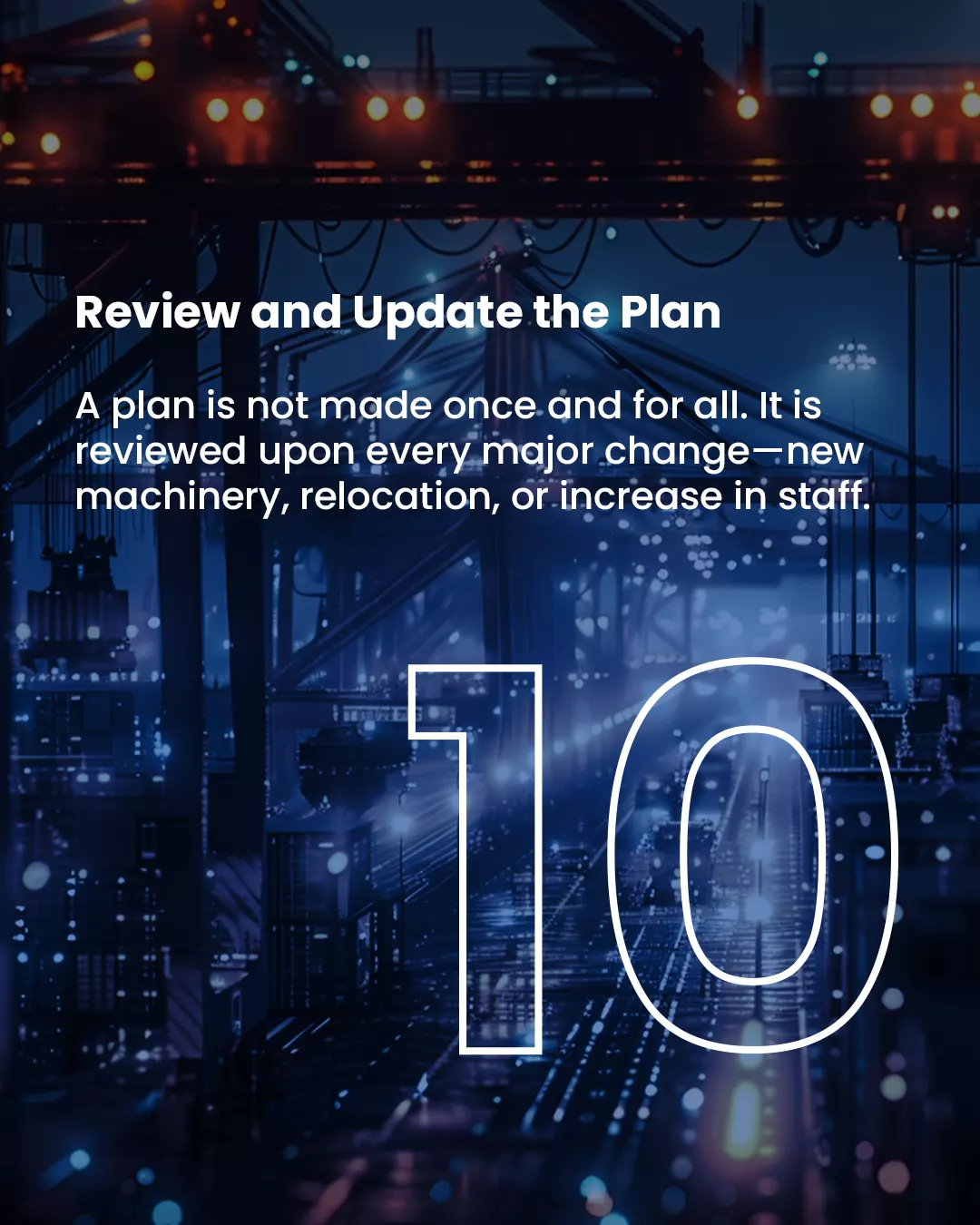
- Continuous Update and Improvement: Reviewing plans at regular intervals as living documents.
Business Continuity is Not a Document, It is a Culture
Business continuity is not a plan waiting on shelves or a document prepared solely due to regulatory requirements.
It is a management culture sustained through top management ownership, corporate awareness, and continuous improvement.
Being prepared is not about managing panic during an emergency; it is about activating pre-thought, tested, and applicable solutions.
This is exactly where the true resilience of institutions begins.